
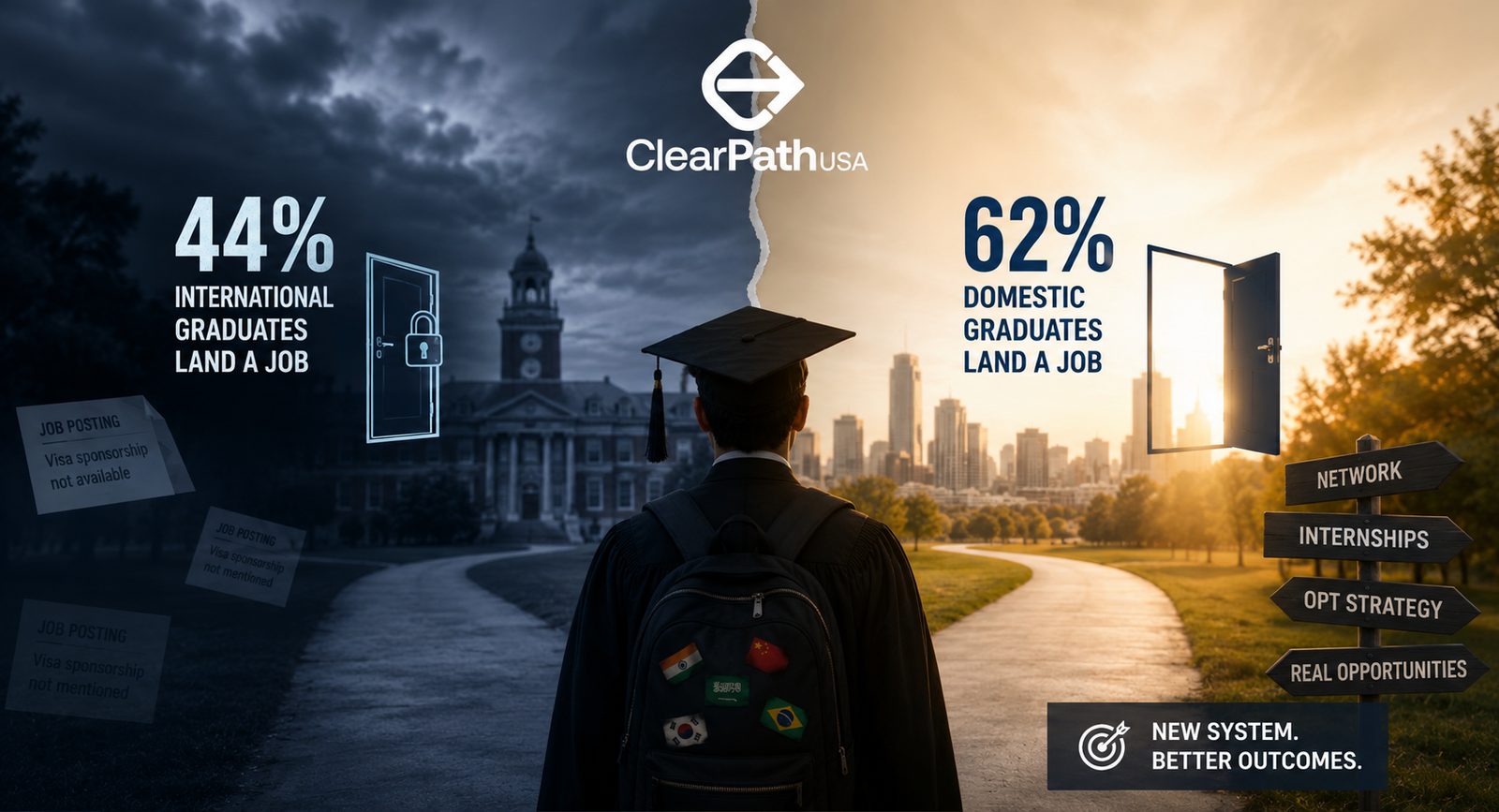
Picture two students graduating from the same U.S. university, same GPA, same major, same year. One is a U.S. citizen. The other is here on an F-1 visa. Their odds of landing a job right after graduation are not close to equal, and the gap is bigger than most families realize until they’re living it.
The numbers, plainly
Roughly 44.6 percent of international graduates find employment after finishing school, compared to 62.1 percent of their domestic classmates. International students also apply to about twice as many jobs as domestic students and still receive fewer offers for the effort. This isn’t a talent gap. It’s a system that wasn’t built with them in mind.
Where the gap actually comes from
A lot of this comes down to one detail buried in job postings: visa sponsorship. Out of more than 1.5 million U.S. job listings analyzed in recent research, only about 1.6 percent mentioned any willingness to sponsor a visa. And the trend is heading the wrong way. Postings explicitly open to H-1B sponsorship dropped from around 10.9 percent in 2023 to just 1.9 percent in 2025. Employers aren’t necessarily closing the door on international talent, but fewer of them are opening it wide in writing, which means a huge share of the job market quietly filters international candidates out before an application is ever submitted.
This isn’t a niche problem
More than 25,000 international student athletes are currently competing at NCAA schools, representing over 120 countries. These are some of the most disciplined, high performing students on any campus, balancing a sport, a full course load, and a visa clock all at once. And they run into the exact same wall as every other international graduate once the season ends and the job search begins. Athletic talent doesn’t come with a sponsorship guarantee.
Zoom out further and the scale gets even bigger. U.S. colleges hosted about 1.2 million international students in the most recent academic year, an all time high. Multiply a 44.6 percent employment rate against a population that size, and you’re looking at hundreds of thousands of graduates every year who finish a U.S. degree and still can’t find their footing into a U.S. career.
What tends to actually work
Students who do beat these odds usually share a few habits, and none of them are about being smarter or more qualified. They start the job search process earlier, often a full year before graduation instead of a few months. They target companies and industries with a track record of sponsoring visas, rather than applying broadly and hoping. They understand exactly how OPT and CPT work before they need them, so a great job offer doesn’t fall apart over a paperwork timeline. And they build a small, specific network instead of relying only on cold applications, since referrals matter even more when a resume alone has to overcome an extra hurdle.
The real takeaway
A tough job market for international graduates isn’t a reason to lower expectations. It’s a reason to start earlier and be more strategic than the general advice floating around a career center that wasn’t designed with visa timelines in mind. The students who plan around these numbers, instead of discovering them the hard way in their final semester, are the ones who end up with real offers on the table.
Our Real World track is built specifically around this gap, covering visa aware job search strategy, OPT and CPT timing, and one on one coaching from mentors who’ve navigated it themselves. Get in touch to see how it applies to your career search.