
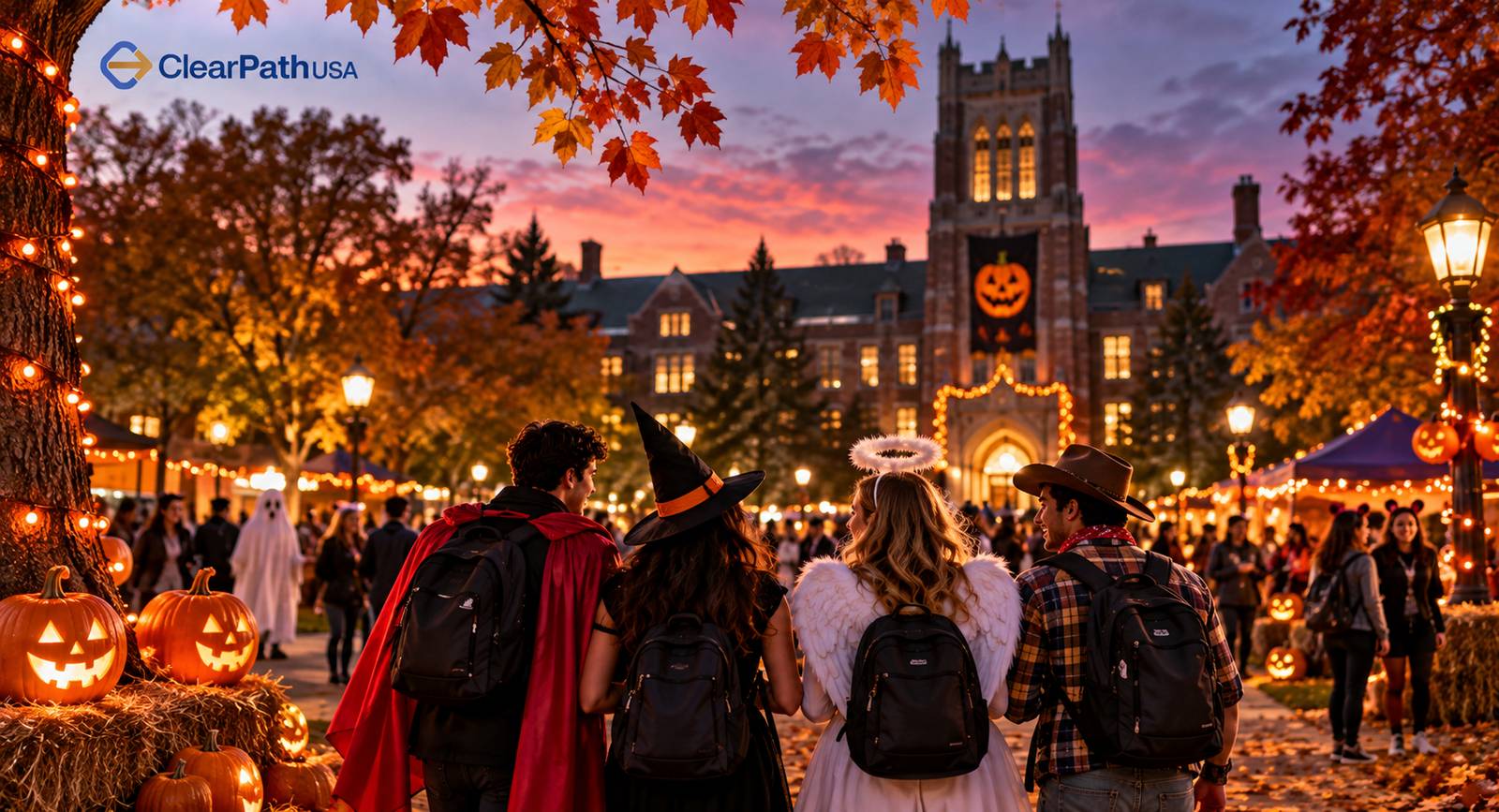
On October 31, you may see a professor teaching in a wizard hat, a classmate dressed as a giant banana and houses covered in fake spider webs. Welcome to Halloween.
It is not a national holiday, so classes still happen. But it is one of the most widely celebrated days of the year, and on a college campus it often stretches across an entire weekend.
What is Halloween, anyway?
Halloween has roots in old Celtic and European autumn festivals marking the end of the harvest. Over time it became a mostly lighthearted American tradition built around costumes, candy and a little bit of spookiness. Today it is about fun far more than fear.
The main traditions
- Trick or treating. Children in costumes go door to door saying “trick or treat!” and neighbors hand out candy. A porch light on usually means a house is participating.
- Costumes. Everyone dresses up, adults included. Costumes can be scary, funny, clever or a reference to something popular that year.
- Decorations. Pumpkins, skeletons, ghosts and spider webs appear on porches weeks in advance.
- Haunted houses. Attractions built to scare you on purpose. Some are mild, some are intense. Read reviews before you go.
Halloween on campus
At most colleges, Halloween means costume parties, residence hall events and club celebrations. Many schools host safe, free events like costume contests, pumpkin carving and movie nights. These are perfect if you want to join in without the late night party scene.
If you do go out, the usual rules apply. Go with friends, keep your phone charged and know how you are getting home.
Costumes on a student budget
You do not need to buy an expensive costume. Some easy options:
- Raid your closet. A flannel and jeans makes a lumberjack. All black plus cat ears makes a cat.
- Hit the thrift store. Goodwill and similar shops stock costume pieces all October.
- Go as a pun. A shirt covered in sticky notes labeled “Pinterest board” costs almost nothing and gets a laugh.
- Coordinate with friends. Group costumes are a big trend and a great way to bond with your roommates.
- Represent home. Some students dress as a famous character, food or figure from their own country, which can spark great conversations.
One important note on costumes
Avoid costumes that turn another culture, religion or ethnic group into a costume. Americans take this seriously, and it is an easy way to make a bad first impression. When in doubt, choose something else.
The best part: November 1
The day after Halloween, stores mark leftover candy down heavily. Many students consider this the real holiday.
Happy Halloween from all of us at ClearPath USA. Send us a photo of your costume on Instagram at @clearpath.usa. We might feature our favorites.
Understanding moments like this is part of feeling at home on campus. Our College track helps international students navigate both academics and everyday American life. Get in touch to see how we can help.