
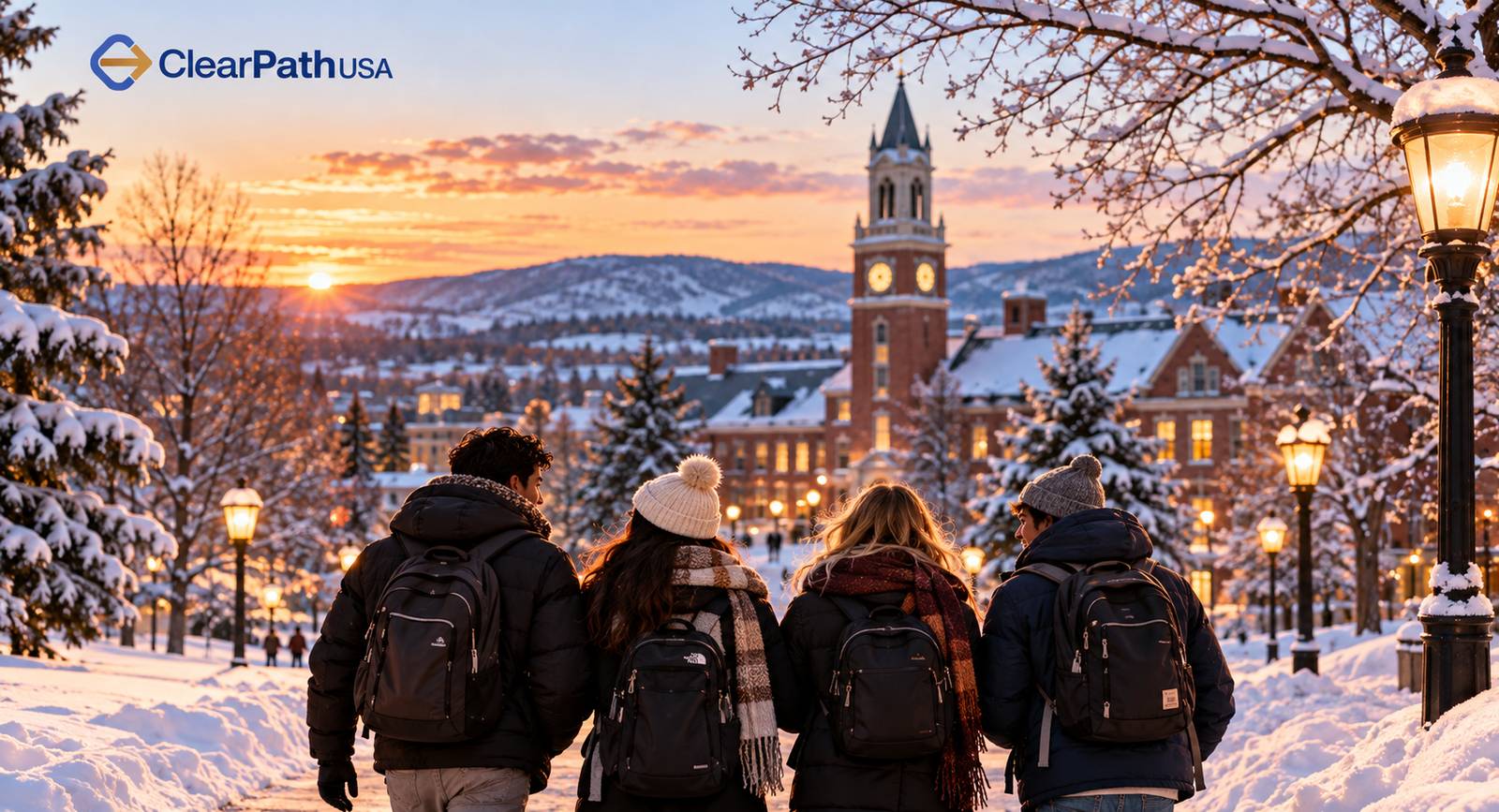
If you grew up somewhere warm, the first cold morning in the U.S. can be a shock. One week you are in shorts. The next you can see your breath on the walk to class.
The good news is that staying warm is a skill, and it is easy to learn. Here is how to get ready now, before the real cold arrives.
Learn the Fahrenheit basics
American weather apps use Fahrenheit, which confuses almost everyone at first. A quick cheat sheet:
| Forecast | Roughly | What to wear |
|---|---|---|
| 60s °F | 15 to 20 °C | Light jacket or sweater |
| 50s °F | 10 to 15 °C | Real jacket, closed shoes |
| 40s °F | 4 to 10 °C | Warm coat, consider a hat |
| 30s °F and below | Near or below freezing | Winter coat, hat, gloves, scarf |
Also check the “feels like” temperature. Wind can make 40 °F feel like 30 °F.
Master the art of layering
Americans dress in layers because temperatures swing all day. A cold morning can turn into a warm afternoon, and classrooms are often heated. Think in three parts:
- Base layer: a fitted long sleeve shirt or thermal top that sits close to your skin.
- Middle layer: a sweater, fleece or hoodie that traps heat.
- Outer layer: a jacket that blocks wind and rain.
When you get too warm, take a layer off. When you get cold, add one back.
Buy smart, not expensive
You do not need to spend a fortune. A few tips:
- Shop thrift stores like Goodwill and Savers for sweaters, flannels and coats at a fraction of the price.
- Wait for sales. Columbus Day weekend, Black Friday and end of season clearances bring big discounts.
- Prioritize your feet. Warm socks (wool is best) and waterproof shoes matter more than you think.
- Ask your school. Many campuses run free coat drives for students who need winter gear.
Keep your room cozy
- Add a thick blanket or comforter to your bed before the first cold night.
- Use a rug if your floor is cold. Your feet will thank you.
- Check your dorm rules before buying a space heater. Many residence halls ban them.
- Close blinds at night to hold in heat.
Take care of your body
Cold, dry air is hard on skin and lips. Pick up a good moisturizer and lip balm early. Drink water even when you do not feel thirsty, since indoor heating dries you out.
Shorter days matter too. Daylight saving time ends on November 1, 2026, and it will get dark around 5 p.m. Get outside during daylight when you can, keep a regular sleep schedule and stay active. If you notice your mood dropping as the days get shorter, talk to your campus counseling center. It is common and they can help.
Embrace the cozy
Americans have a whole culture around cold weather comfort. Hot chocolate, oversized sweaters, fuzzy socks and a good movie on a cold night. Once you have the right gear, fall and winter can become some of your favorite seasons.
New to the U.S. and figuring all of this out at once? ClearPath USA helps international students with the practical side of life here, from your first winter coat to your first job. Our College track covers campus life alongside academics, and you can get in touch if you want help settling in.